
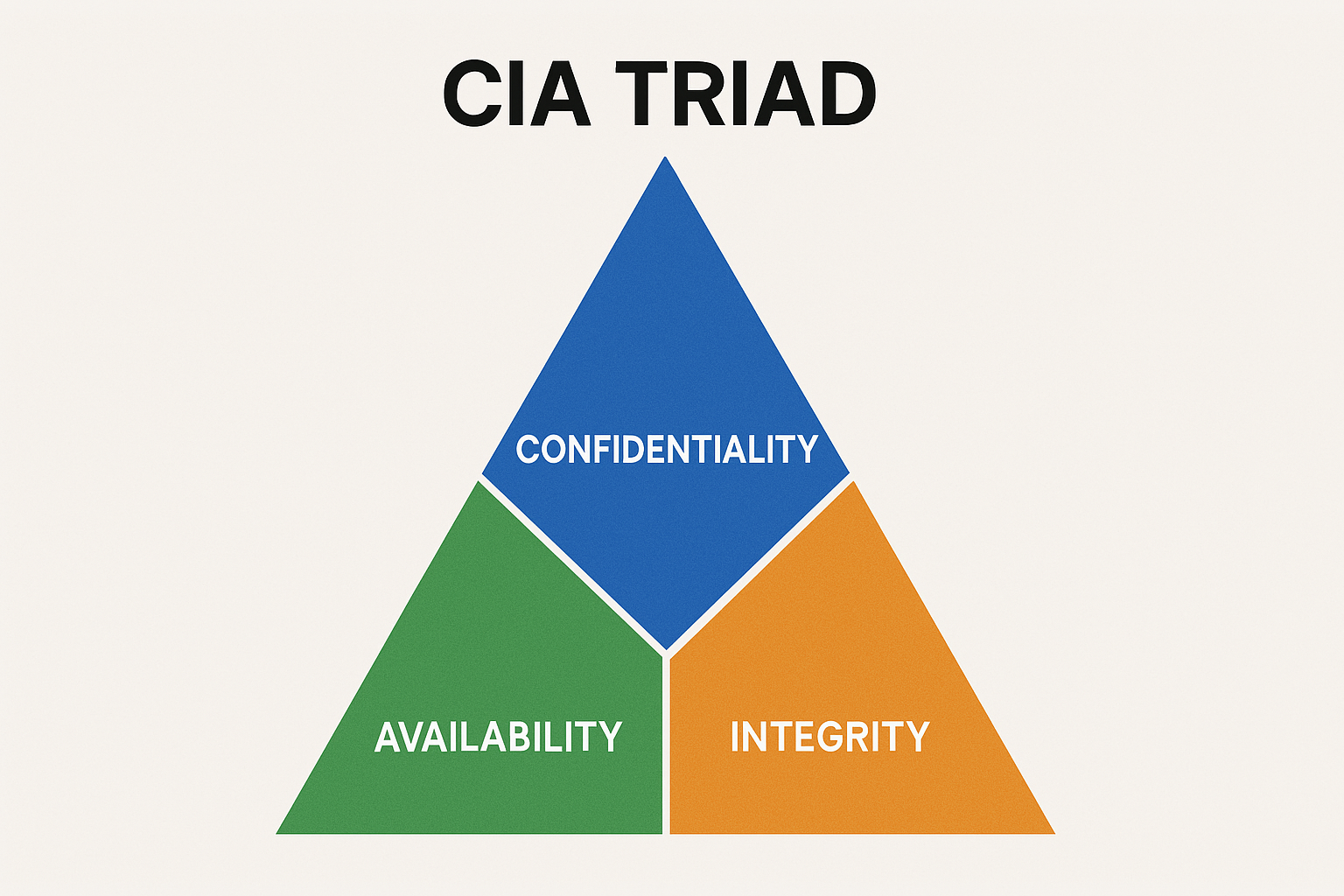
The CIA Triad - Confidentiality, Integrity, Availability
When organisations think about keeping data secure, they often use a model called the CIA Triad. This stands for Confidentiality, Integrity, and Availability. Each part has its own purpose, but they are closely linked and depend on each other to keep systems safe and reliable.
Confidentiality: Keeping Data Private
Confidentiality is about making sure that only authorised people can access data. This might include protecting personal details, passwords, financial records, or business information.
Organisations use methods such as passwords, encryption, and access controls to achieve this. For example, a school system might restrict student records so only teachers and administrators can view them.
If confidentiality is weak, unauthorised users could gain access to sensitive data. This doesn’t just break privacy, it can also create further problems for integrity and availability.
Integrity: Making Sure Data Is Accurate and Untouched
Integrity means that data has not been changed, corrupted, or tampered with. Users need to trust that the information they are working with is correct.
One important link here is that maintaining confidentiality helps protect integrity. If only authorised users can access data, there is a much lower risk of someone altering it without permission. For example, if a hacker cannot access a database, they also cannot change the records inside it.
Organisations also use tools like hashing, validation checks, and permissions to maintain integrity. Without integrity, data becomes unreliable, even if it is still private.
Availability: Ensuring Data Is Accessible When Needed
Availability means that data is accessible and usable when required. Systems need to be running, data needs to load quickly, and users must be able to access what they need to do their work.
This links closely to integrity. If data has been corrupted or tampered with, it may no longer be usable, even if it is technically accessible. For example, a damaged database might still open, but the information inside could be incorrect or incomplete, making it effectively useless.
Maintaining integrity ensures that when data is accessed, it is still accurate and meaningful, which supports availability.
How the Three Elements Interrelate
The three elements of the CIA Triad are closely connected and work most effectively when they support one another. Confidentiality helps to protect integrity by limiting access to authorised users only. When fewer people can view or interact with data, the risk of it being altered or tampered with is significantly reduced.
Integrity, in turn, supports availability. Data that is accurate and has not been corrupted remains useful when it is accessed. If information has been changed or damaged, it may still be accessible, but it cannot be relied upon, which reduces its practical availability.
Availability depends on both confidentiality and integrity. Data is only truly available if it can be accessed when needed, is trustworthy, and is accessed by the correct users. Simply having access to data is not enough if it is either insecure or unreliable.
If one element fails, it can weaken the others. For example, a data breach caused by poor confidentiality could allow attackers to modify information, damaging its integrity. If data becomes corrupted, it may no longer be usable, which affects availability. Similarly, if a system goes offline, authorised users cannot access important data, even if it remains secure and accurate.