What is Confidential Information?
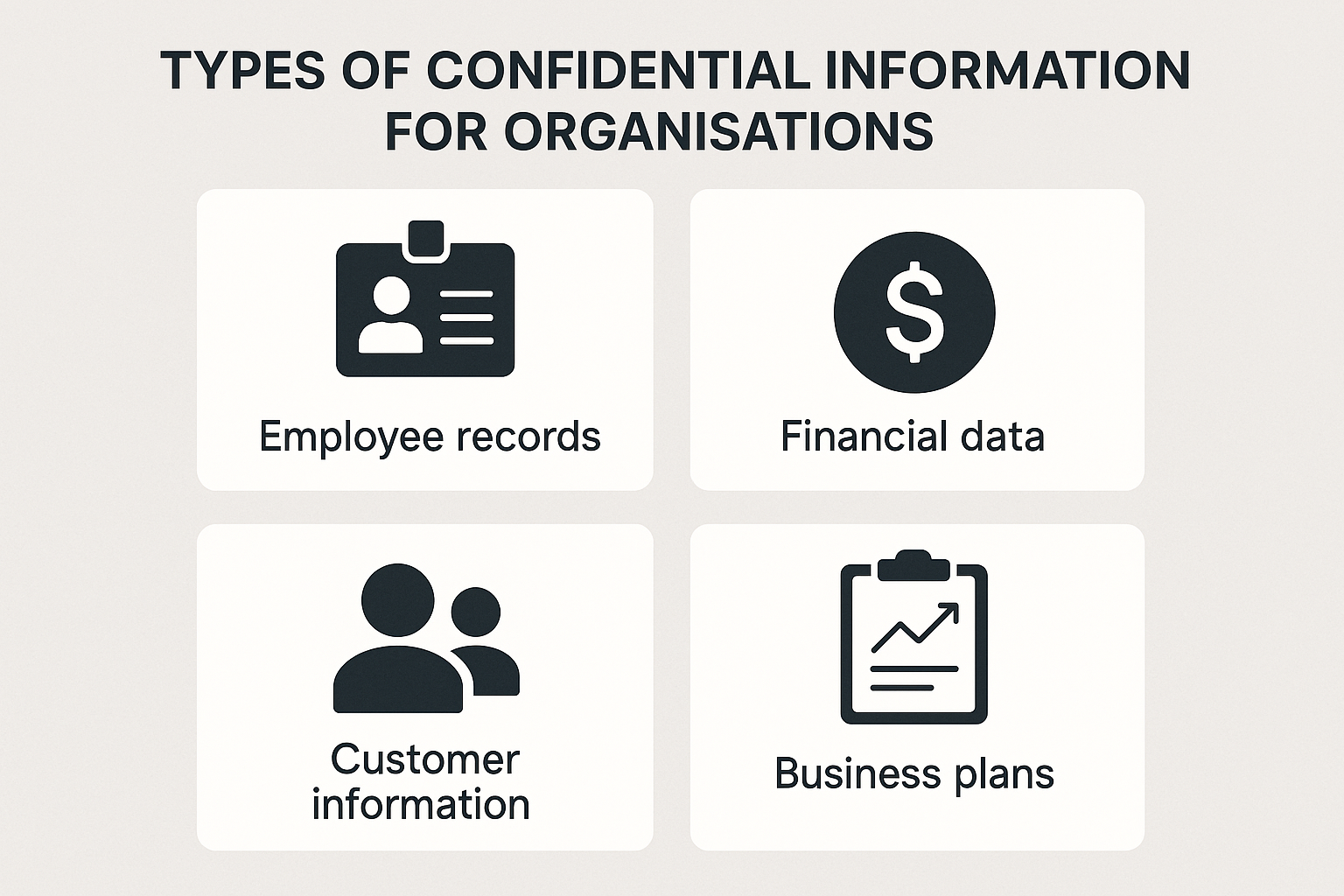
Confidential information is any data that must be kept secure to protect individuals and organisations. Every organisation, such as schools, hospitals, and businesses, handles this type of information. Keeping it safe is essential for legal compliance, financial security, trust, and personal safety.
Human Resources (HR) Information
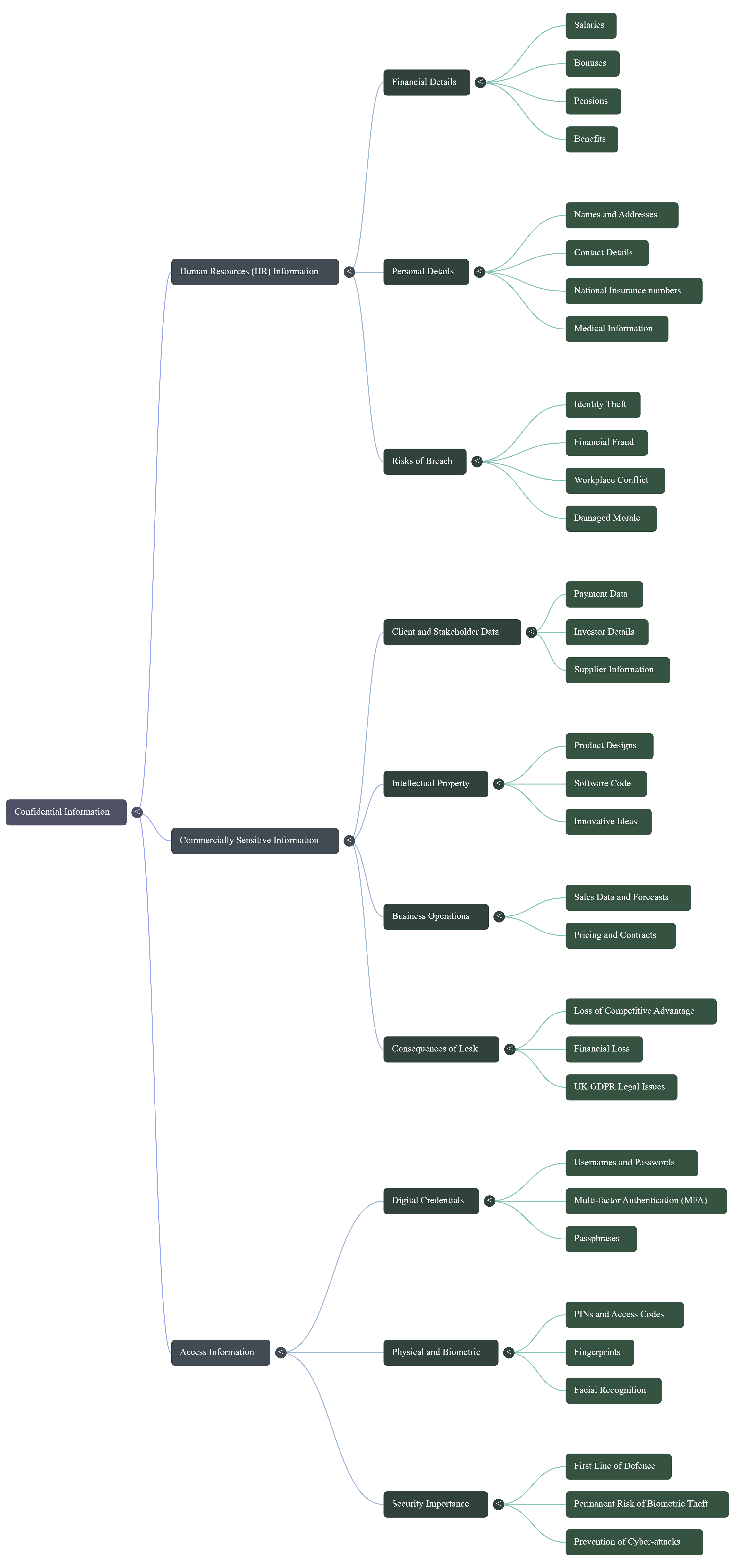
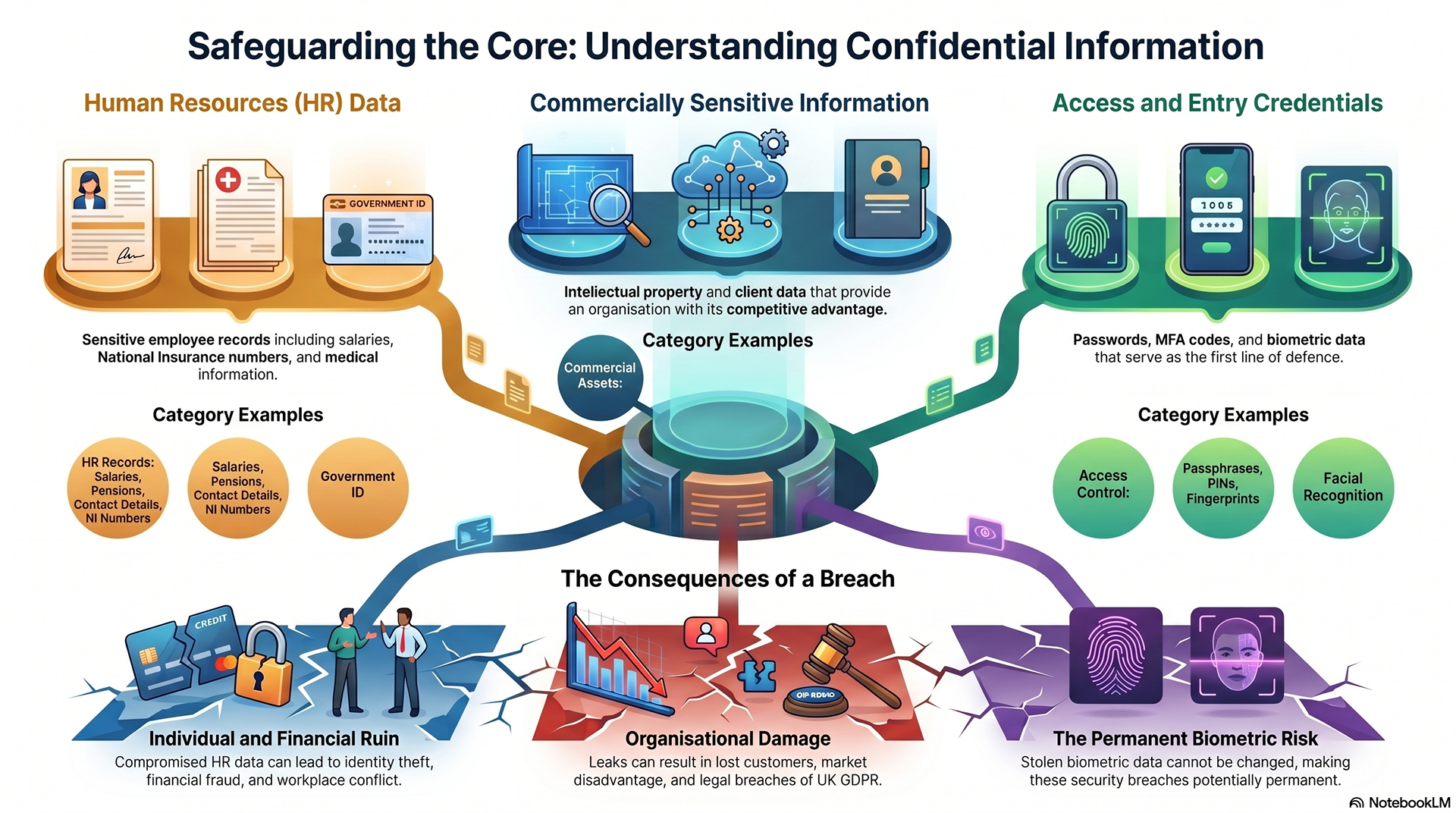
Human Resources (HR) information relates to employees and is highly sensitive because it includes both personal and financial details. Organisations store a wide range of this data to manage staff effectively, including salaries, bonuses, pensions, and other benefits. They also hold personal information such as names, addresses, contact details, National Insurance numbers, and in some cases, medical information.
This type of information must be carefully protected because of the risks associated with it. If HR data is leaked or accessed without permission, it could lead to serious consequences such as identity theft or financial fraud. It may also cause workplace conflict if sensitive details like salaries become public, potentially damaging trust and morale within the organisation.
Commercially Sensitive Information
Commercially sensitive information is data that gives a business its competitive advantage. It is essential to the organisation’s success and often represents significant time, investment, and expertise. If this type of information is exposed, it can weaken the organisation’s position in the market and lead to financial harm.
Examples of commercially sensitive information include client details such as contact information and payment data, as well as stakeholder information relating to investors and suppliers. It also includes intellectual property, such as product designs, software code, and innovative ideas that make a business unique. Other highly sensitive information includes sales data like revenue figures and forecasts and contracts that outline pricing and legal agreements.
Protecting this information is critical because leaks can result in serious consequences. Organisations may lose customers if trust is damaged, suffer financial losses if competitors gain access to valuable insights, and face legal issues if data protection laws such as the UK GDPR are breached.
Access Information
Access information is used to control entry to systems, accounts, and physical spaces such as buildings. It acts as the first line of defence in protecting sensitive data. If this information is compromised, attackers can bypass security measures and gain access to other types of confidential information within the organisation.
Common examples of access information include usernames and passwords, multi-factor authentication (MFA) codes, PINs, and access codes used for secure entry systems. Passphrases, which are longer and often more secure than traditional passwords, are also widely used. Some organisations also rely on biometric data such as fingerprints or facial recognition to verify identity.
Protecting access information is critical because weak or stolen passwords are one of the most common causes of cyber-attacks. If attackers gain access credentials, they can often move freely within systems. Biometric data is particularly sensitive because, unlike passwords, it cannot be changed if it is stolen, making any breach potentially permanent.
Video Explainer
Securing the Vault Video Explainer
Mind Map